.svg)
Your Project Is Stuck. Here's What to Do Before It Gets Worse

.svg)

Nobody calls us when everything is going well. They call us when the ERP go-live has been pushed twice, the implementation partner keeps rotating consultants, and the internal team is burning out trying to hold it all together.
The truth is, most enterprise technology projects don't fail because of the technology. They fail because the right people weren't in the right seats at the right time. And by the time leadership realizes the team is the problem, weeks or months of budget and momentum have already been lost.
If any of this sounds familiar, you're not alone — and you're not too late to fix it.
The Warning Signs
Stalled projects rarely announce themselves. They erode slowly, and by the time someone raises a flag, the damage has already compounded. Here are the patterns we see most often.
Timelines keep slipping with no clear explanation. A two-week delay turns into six. Milestones get quietly redefined. Status reports start sounding the same week after week — progress is always "on track" but nothing tangible is being delivered.
Key roles are empty or filled by the wrong people. The solution architect left and was never backfilled. The functional lead is a junior consultant who's learning your business on your dime. The project manager is splitting time across three other engagements. You don't have a team — you have a collection of partial resources.
Your implementation partner is part of the problem. They're defensive in status calls. They push back on scope without offering alternatives. The senior people who sold the engagement are nowhere to be found, and the team doing the work doesn't have the experience to course-correct.
Internal confidence is dropping. Business stakeholders are losing faith. Your executive sponsor is asking harder questions. The team is exhausted and starting to disengage. The project that was supposed to transform the business is quietly becoming the thing everyone dreads.
If you're seeing two or more of these at the same time, the project isn't just behind — it's at risk.
Why Most Rescue Efforts Fail
The instinct when a project stalls is to throw more people at it. More consultants, more meetings, more oversight. But adding headcount to a broken structure doesn't fix the structure — it just makes it more expensive.
The other common move is to renegotiate with the current partner. Sometimes that works. Often it doesn't, because the fundamental issue is a capability gap, not a contractual one. If the team doesn't have the experience to deliver, a new SOW won't change that.
The projects that actually get rescued share one thing in common: someone made the decision to bring in the right people — not more people.
What a Real Rescue Looks Like
When a client comes to us with a stalled project, the first thing we do is listen. Not sell. We dig into what's actually broken — the tech stack, the team composition, the project phase, the timeline pressure, and the politics. Every stuck project has a different root cause, and the fix has to match the problem.
Sometimes the answer is one senior contractor who can step in as a functional lead and stabilize the workstream in two weeks. Sometimes it's a small team of three or four specialists who can take ownership of a critical phase and get it across the line. Sometimes it's a delivery partner who can supplement or replace the current implementation team entirely.
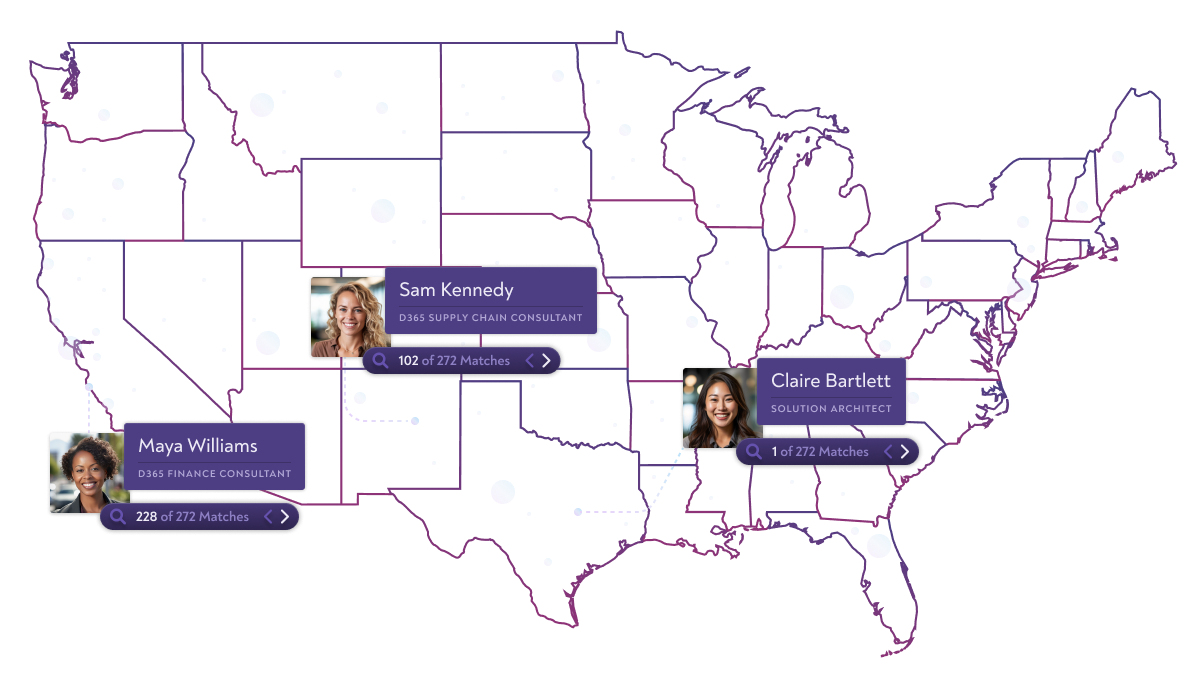
Whatever the engagement looks like, we move fast. We source from a network of enterprise technology professionals we've already vetted, already met, and already placed on similar projects. We don't start from scratch — we match from experience.
And we stay in it with you. We check in after placement, monitor how the engagement is going, and make adjustments if something isn't working. A rescue isn't a one-time transaction — it's a commitment to getting the project back on track and keeping it there.
The Cost of Waiting
Here's the math most organizations don't do until it's too late. Every week a stalled project stays stalled, you're burning budget on a team that isn't delivering. You're losing credibility with stakeholders who approved the investment. You're pushing back downstream initiatives that depend on the project being done. And you're exhausting the internal team that's trying to hold it together with duct tape.
The cost of bringing in the right person for eight weeks is almost always less than the cost of letting the wrong team drift for another quarter. The organizations that recover fastest are the ones that make the call early — before the project becomes a write-off.
When to Call Us
You don't need to be in crisis mode to reach out. If your project is behind and you're not sure why, if your team has gaps you can't fill internally, or if you're starting to lose confidence in your current partner's ability to deliver — that's enough.
One conversation is all it takes to understand your situation and tell you honestly whether we can help. No pitch deck, no sales cycle. Just a direct conversation with someone who's seen this before and knows how to fix it.
Book a call or reach out directly. The sooner you make the move, the more of your timeline and budget you'll save.
Related Articles




It's Time to
Get to WorQ.
Need talent, a delivery partner, or just a gut check on your current plan? We're one conversation away.